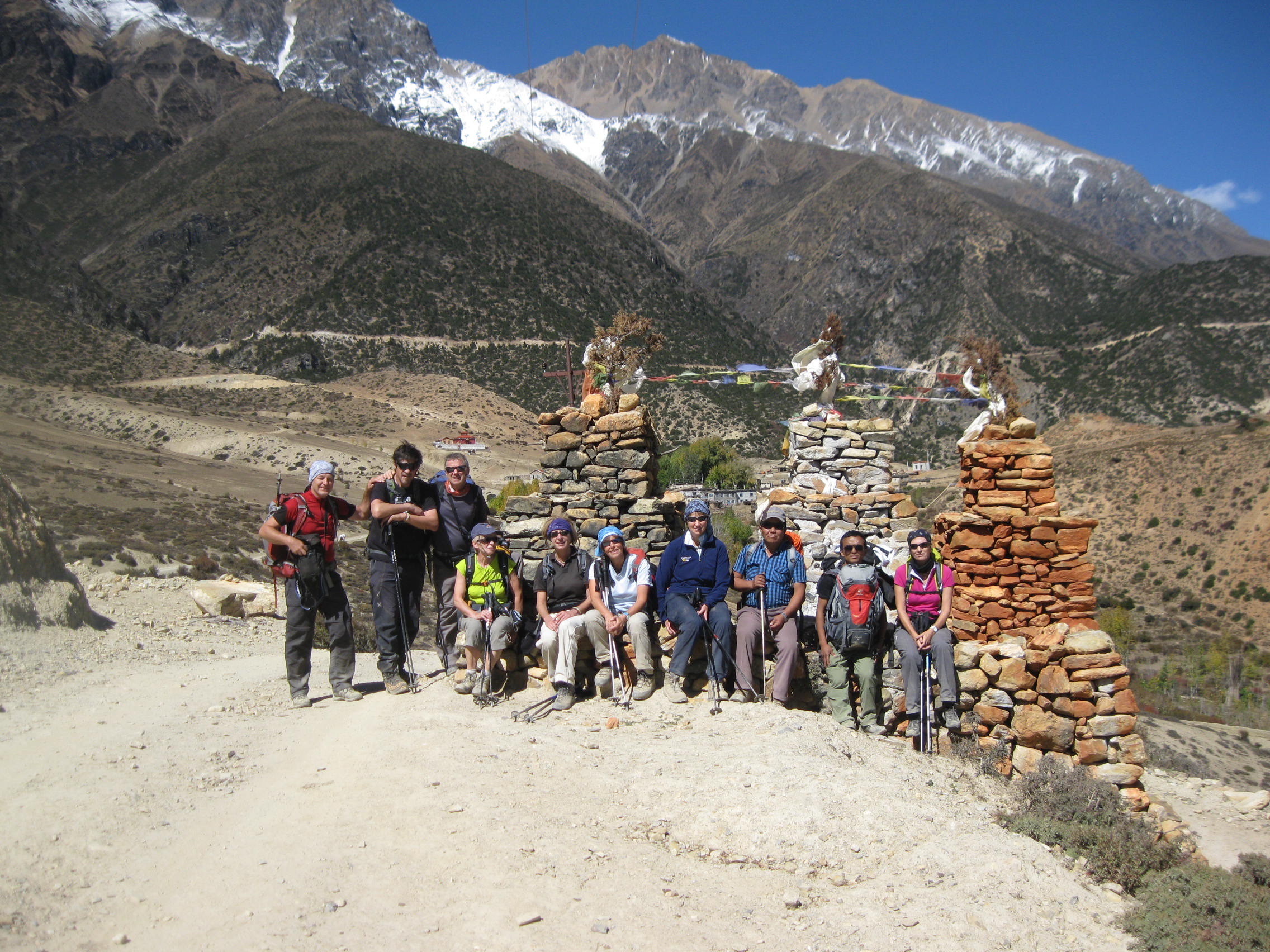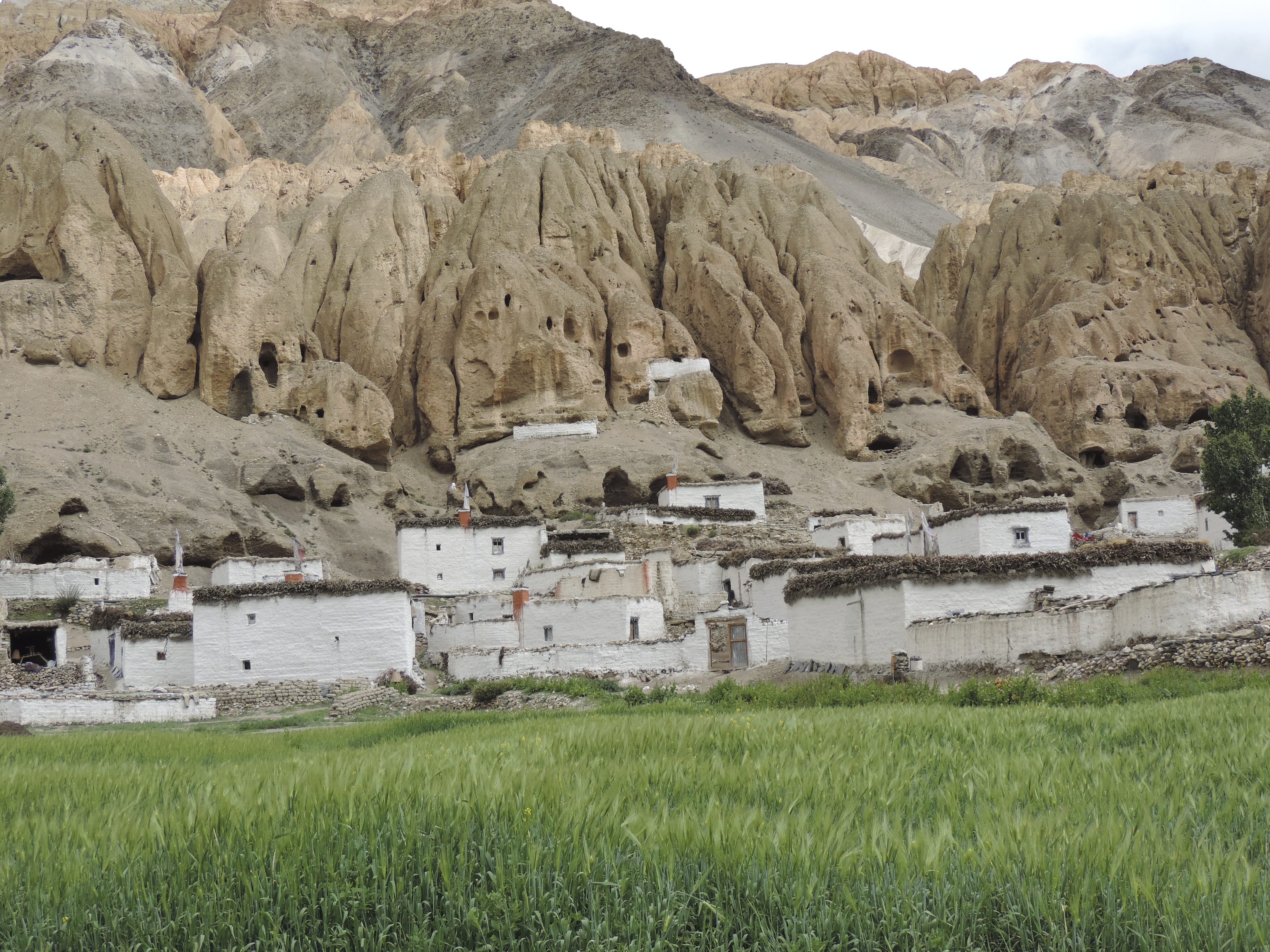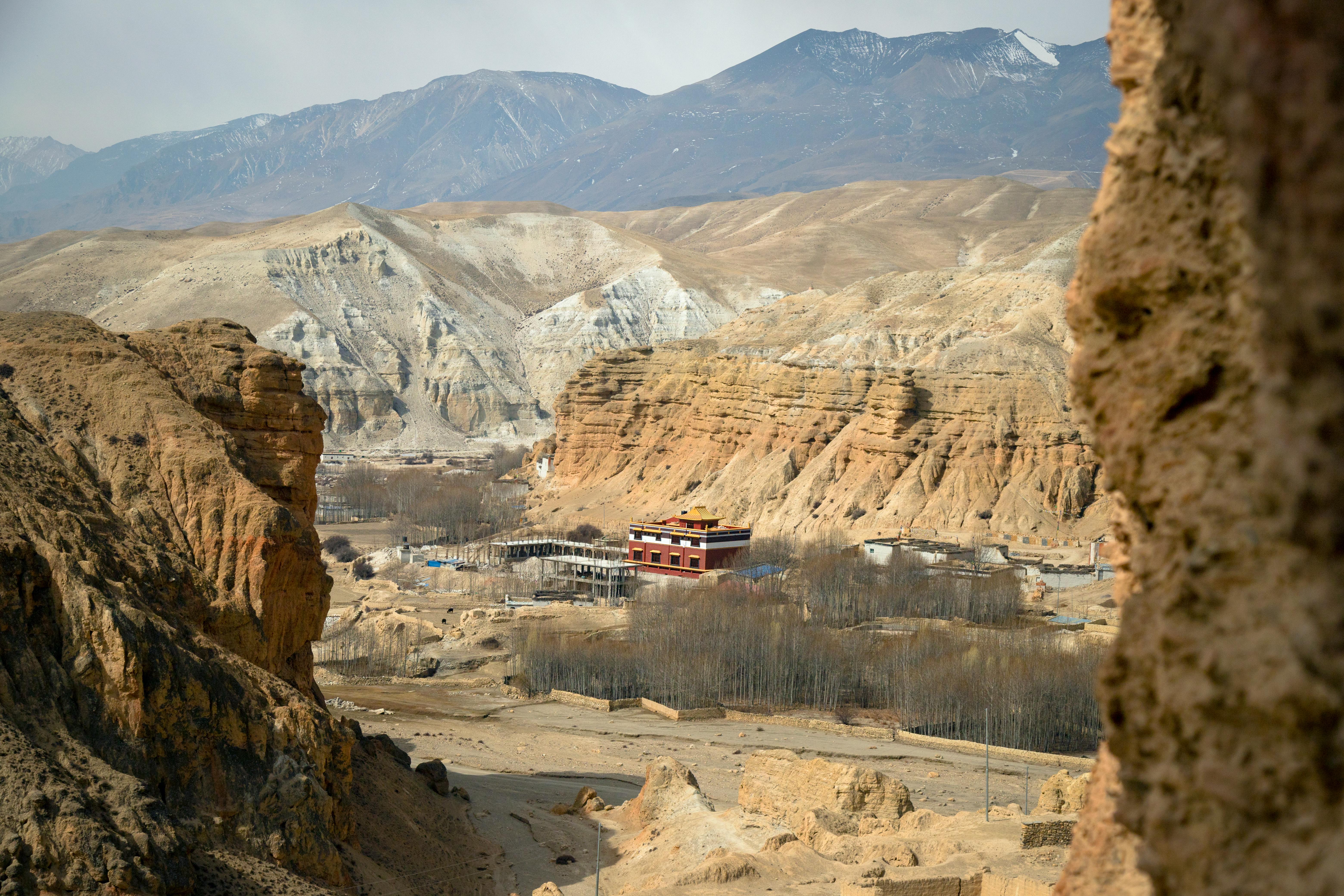

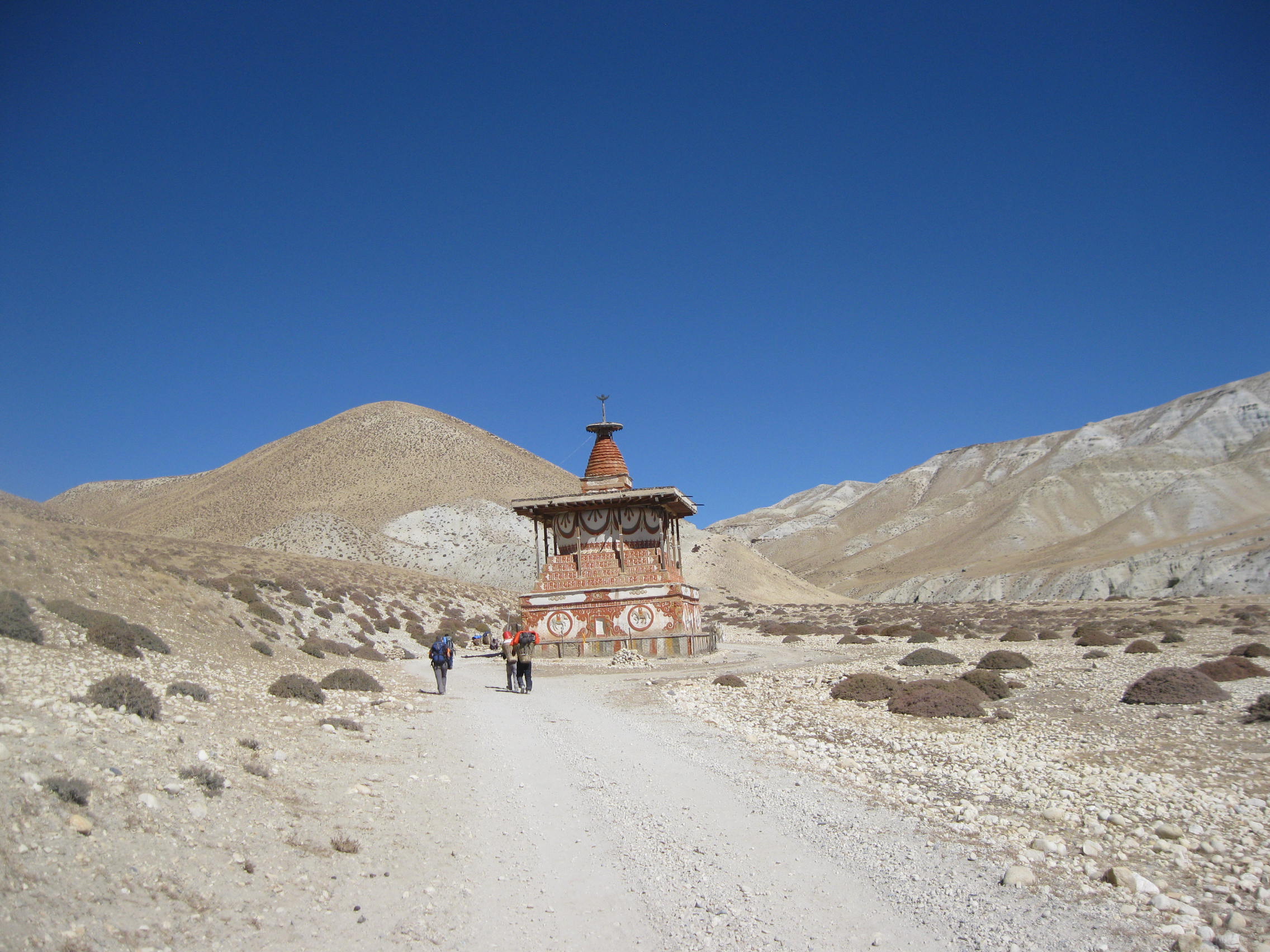
The 14-day Upper Mustang Trek is designed for trekkers who want a focused and culturally rich journey into the former Kingdom of Lo without extending too far into side valleys. This itinerary follows the classic Upper Mustang corridor and offers a clear introduction to the region’s landscapes, people, and spiritual heritage.
The journey begins with a scenic drive from Kathmandu to Pokhara and onward toward Jomsom, where the terrain begins to change noticeably. Green hills and river valleys gradually give way to drier landscapes as the trail enters the Kali Gandaki corridor. After crossing Kagbeni, the official gateway to Upper Mustang, the environment shifts into a stark, wind-shaped world of eroded cliffs, wide plateaus, and open skies.
Walking days are steady and well-paced, passing through traditional villages such as Chhusang, Syangboche, and Ghemi. Life here moves at a slower rhythm, shaped by farming cycles, monastery rituals, and seasonal trade. Mani walls, prayer flags, and whitewashed chortens line the trail, reflecting the region’s deep-rooted Tibetan Buddhist identity.
The highlight of the trek is the arrival at Lo Manthang (3,810m), the ancient walled capital of Mustang. Time is set aside to explore its monasteries, royal structures, and narrow lanes, allowing trekkers to absorb the atmosphere rather than rush through it. The return journey continues via a slightly varied route before descending toward Muktinath, an important pilgrimage site for both Hindus and Buddhists.
Daytime temperatures during the trekking season typically range from 10°C to 18°C at lower elevations and 8°C to 15°C in Upper Mustang villages. Nights are colder, especially around Lo Manthang, where temperatures often fall between -5°C and 4°C.
This itinerary suits trekkers with limited time who still want a meaningful Upper Mustang experience without compromising cultural depth.
Travel Notes for Upper Mustang Trek
Best Season
-
Spring (March–May): Mild temperatures, clear skies, blooming wildflowers
-
Autumn (September–November): Stable weather, crisp air, excellent visibility
Trek Style
-
Teahouse accommodation in accessible villages
-
Tented camping in remote sections where lodges are unavailable
Permits Required
-
Upper Mustang Restricted Area Permit (RAP)
-
Annapurna Conservation Area Permit (ACAP)
-
TIMS Card
Physical Requirements
-
Good general fitness required
-
No technical climbing involved
-
Daily walking: 5–7 hours on average