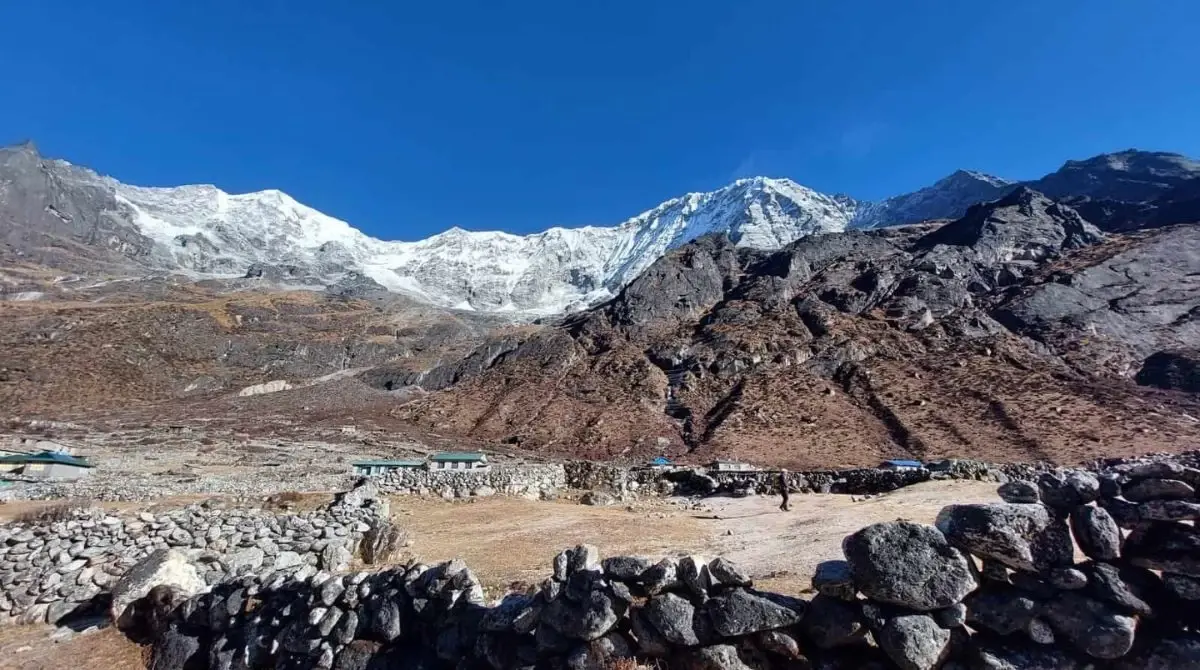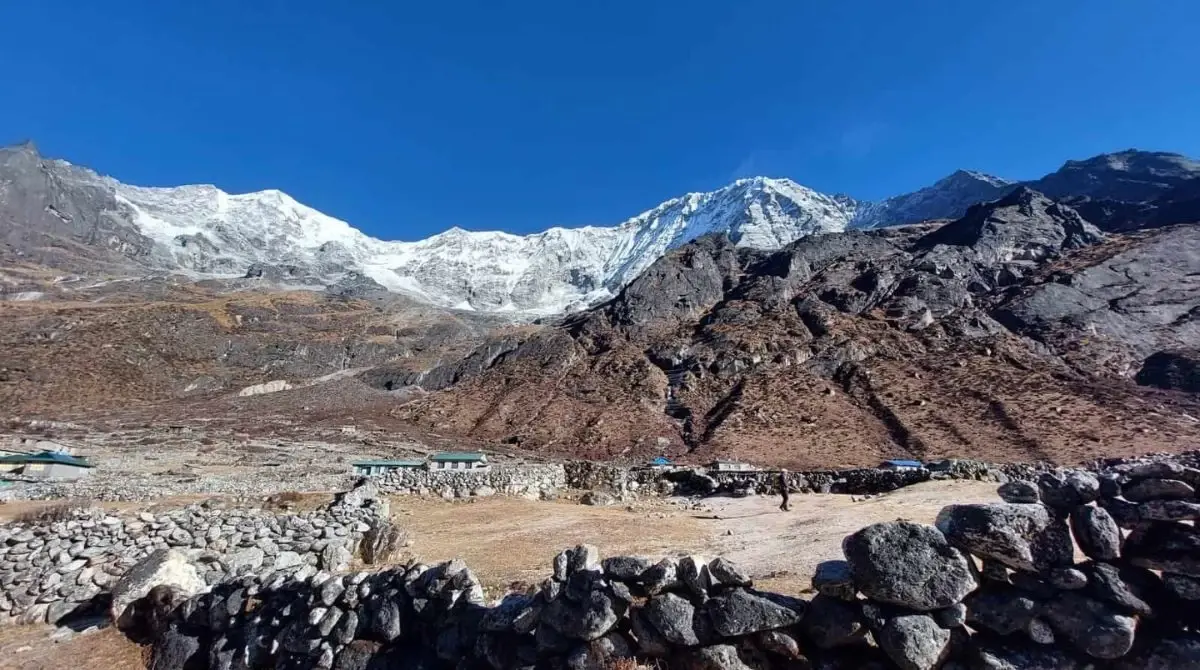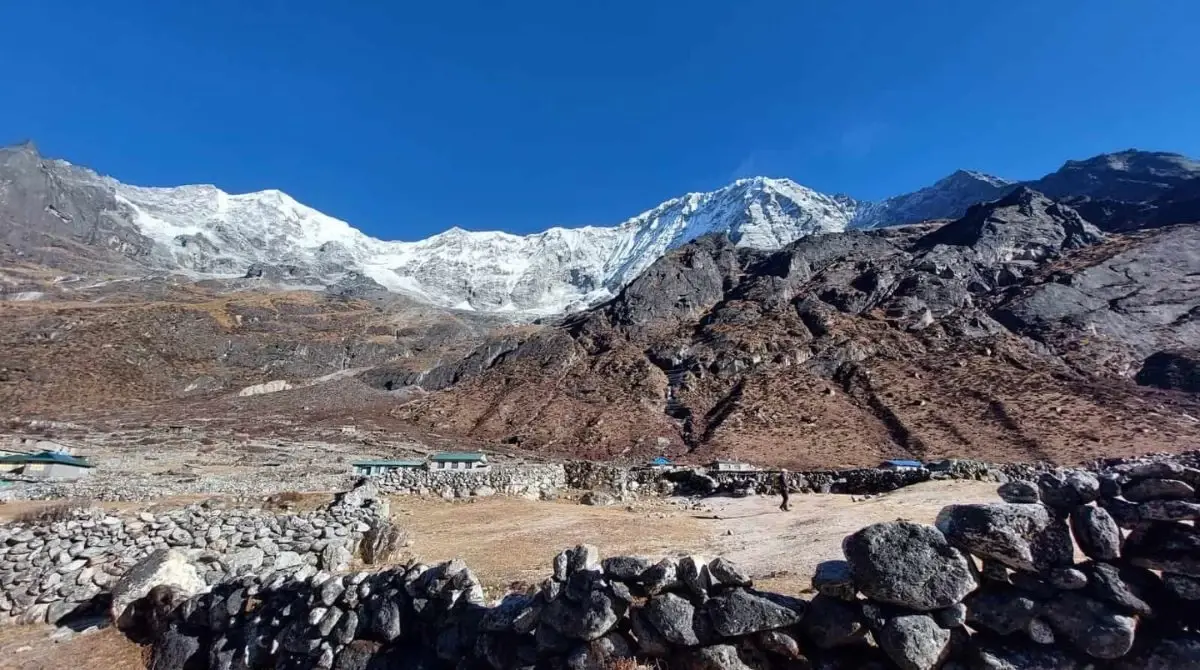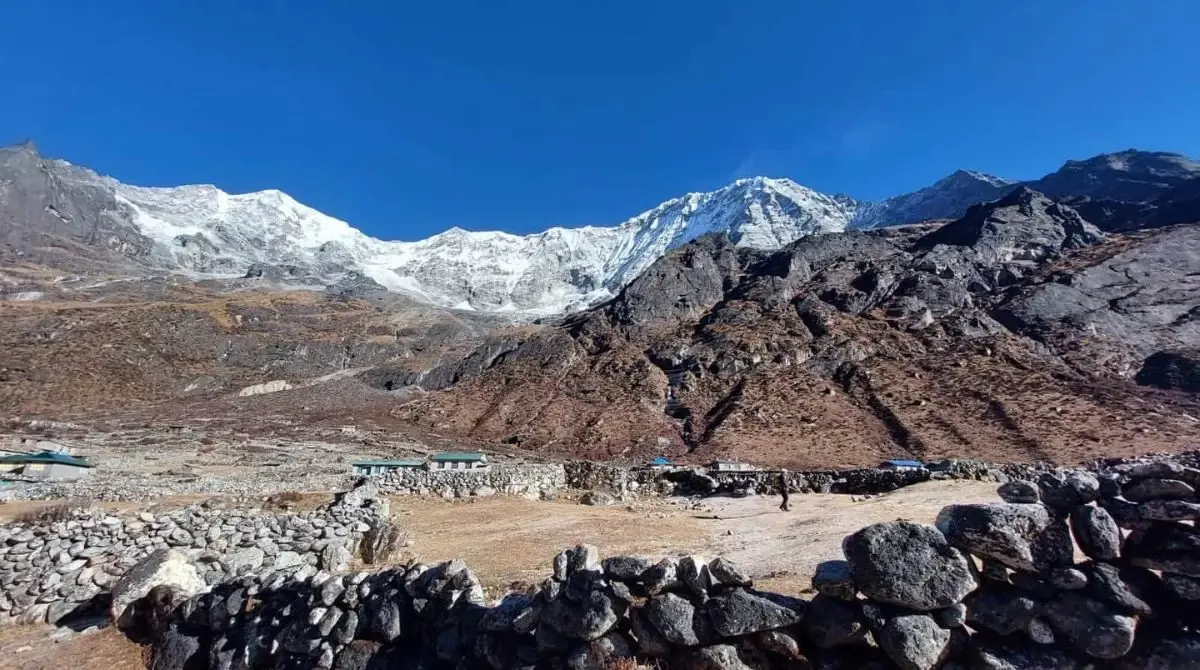
The Tashi Lapcha Pass Trek is a demanding high-altitude journey that links the remote Rolwaling Valley with the well-known Khumbu region. Designed for trekkers with prior mountain experience, this route combines wilderness travel, glacial terrain, and classic Himalayan culture in a single traverse.
The journey begins with a scenic jeep drive from Kathmandu to Jagat, avoiding domestic flights at the outset and offering a gradual transition into the mountains. From here, the trail climbs steadily through forested slopes and traditional settlements toward the upper Rolwaling Valley, an area known for its isolation and raw alpine character.
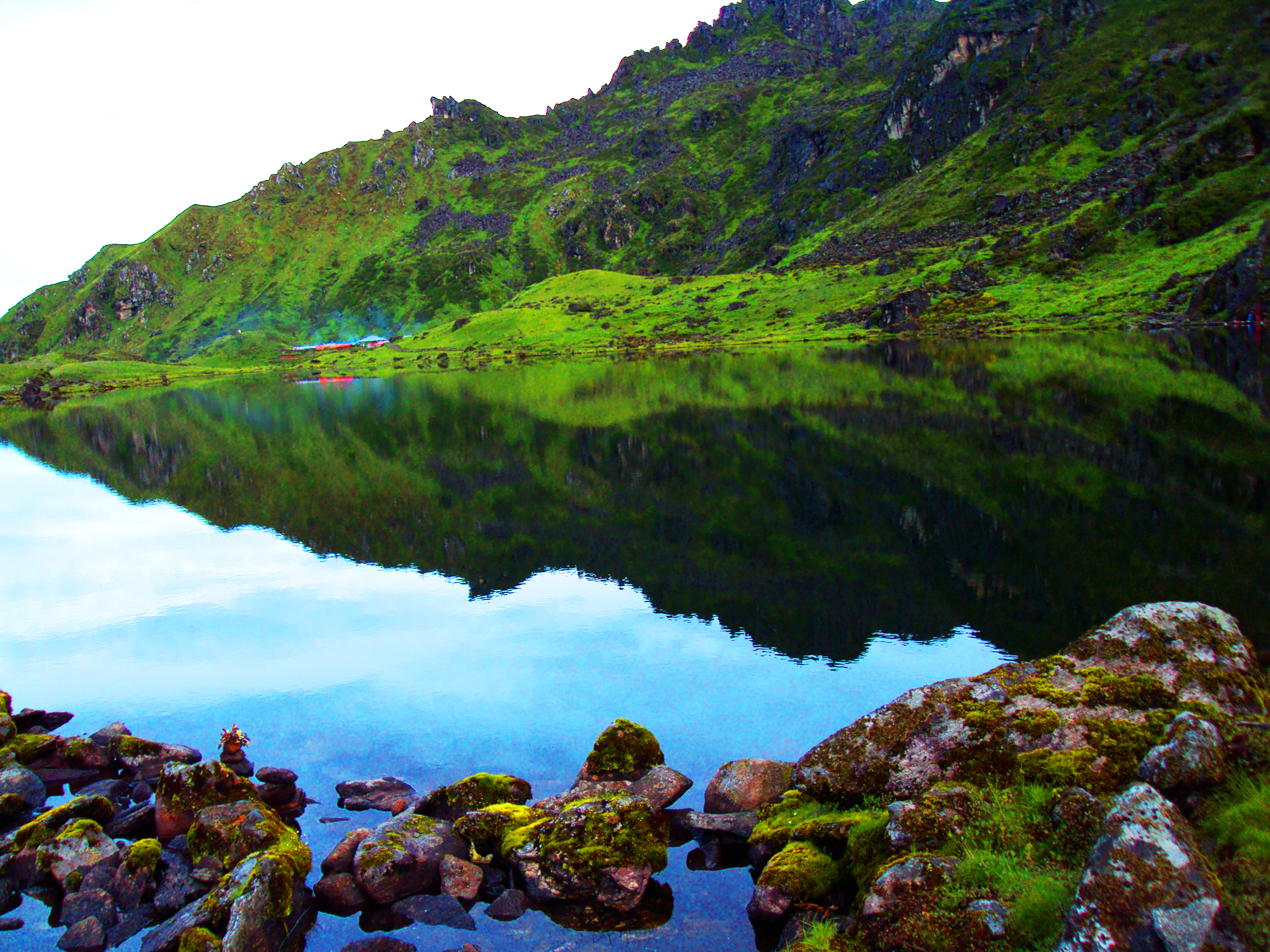
A major highlight of the trek is Tso Rolpa Lake, one of Nepal’s largest glacial lakes. Surrounded by ice walls and moraines, the lake provides a stark and dramatic setting before the route moves into more technical terrain. Beyond Tso Rolpa, the trail ascends toward the base of the pass, where conditions become increasingly alpine and demanding.
The crossing of Tashi Lapcha Pass (5,755 m) is the most challenging section of the trek. Snow, ice, and glacial travel are common, and fixed ropes may be required depending on conditions. From the pass, the route opens into a wide panorama of some of the world’s highest peaks, marking the transition from the Rolwaling region into the Khumbu.
Descending into Khumbu, the landscape and atmosphere change noticeably. Well-established trails lead through classic Sherpa villages, where monasteries, stone houses, and terraced fields reflect the cultural heart of the Everest region. The trek concludes in Lukla, followed by a mountain flight back to Kathmandu, offering a final aerial view of the Himalayan range.
This trek is ideal for those seeking a serious Himalayan crossing that blends remote wilderness, high-altitude challenge, and cultural depth, rather than a standard out-and-back trekking route.
Trip Notes
Temperature and Weather
Temperatures vary widely throughout the trek due to elevation and season. In lower sections such as Jagat and Simigaun, daytime temperatures generally range from 10°C to 20°C during the main trekking seasons. Nights remain cool but manageable.
Above Beding and Nagaun, daytime temperatures often drop to 0°C to 10°C, while nights can fall well below freezing. Around Tso Rolpa and at Tolum Buk, night temperatures commonly range from –10°C to –15°C. At Tashi Lapcha Pass (5,755 m), temperatures can fall to –20°C or lower, especially in windy conditions. Sudden weather changes are common at higher elevations.
Seasonal Conditions
The best seasons for this trek are spring (April–May) and autumn (October–November). During these periods, weather windows are more stable, and snow conditions on the pass are generally manageable. Winter brings extreme cold and heavy snow accumulation, while the monsoon season increases the risk of poor visibility, unstable trails, and difficult river crossings.
Physical Requirements
This trek is suited to experienced trekkers with prior high-altitude exposure. The pass crossing involves steep ascents, glacier travel, and long days at altitude. A strong level of fitness and comfort with sustained uphill and downhill walking is essential.
Technical Considerations
Crossing Tashi Lapcha Pass may require the use of crampons, ice axe, harness, and fixed ropes depending on snow and ice conditions. A qualified mountain guide is mandatory, and weather flexibility is necessary. The itinerary may need adjustment if conditions are unsafe.
Accommodation and Facilities
Lodges are available up to Beding and in the Khumbu region. Above Beding, accommodation is mostly in basic lodges or fully supported tented camps. Facilities are limited, and electricity, heating, and communication should not be expected at higher camps.
Altitude and Acclimatization
Proper acclimatization is critical. The itinerary includes a dedicated rest day at Beding to reduce the risk of altitude-related illness. Trekkers should be aware of symptoms of altitude sickness and follow the guide’s instructions at all times.
Flights and Delays
The return flight from Lukla to Kathmandu is weather dependent. Delays are common, particularly during peak seasons. Extra buffer days are strongly recommended for international connections.